Acrylic Court Resurfacing: Complete Guide to Old Sports Court Renovation
If you’re staring at an old acrylic court—cracked, faded, or peeling—and thinking, “Do I really need to tear it down and build a new one?” Let me save you time and money: acrylic court resurfacing is almost always the better choice. We’ve been doing this for over 10 years, working with contractors, schools, and communities across Southeast Asia and the Middle East, and I’m gonna break down everything you need to know—no jargon, just real, actionable tips.
This isn’t a sales pitch; it’s the stuff we tell our own clients when they call with a worn-out court. Let’s dive in.
1. Signs Your Acrylic Court Needs Resurfacing (You’ll Recognize These)
First things first: How do you know it’s time to resurface, not just patch? We’ve seen it hundreds of times—here are the red flags you can’t ignore:
- Surface fading and discoloration: The court used to be bright (blue, green, whatever you chose) but now it’s dull, patchy, or even gray. This isn’t just cosmetic—fading means the top layer is wearing thin, and water will start seeping in.
- Cracks (big or small): Even tiny hairline cracks are trouble. They’ll get bigger over time, especially with heavy rain (hello, Southeast Asia monsoons) or high heat (Middle East summers). We once fixed a court with cracks so wide, you could fit a finger in—don’t let it get that bad!
- Peeling and blistering: If the acrylic is bubbling up or peeling off in flakes, that means the base layer isn’t sticking anymore. Walking or playing on this is slippery and unsafe.
- Rough surface or sanding off: Run your hand over the court—if it feels gritty, like sand is coming off, the topcoat is worn out. This makes the court uncomfortable to play on and speeds up further damage.
- Water pooling after rain: If water sits on the court for more than 30 minutes after a rainstorm, the surface is uneven. This not only ruins play but also rots the base over time.
Pro tip: If you see 2+ of these, don’t wait. Small issues are cheap to fix; big ones? You’ll end up spending more than a full resurfacing.
2. Why Resurfacing Is Way Better Than Building a New Court (Trust Me)
I get it—sometimes you look at an old court and think, “Just start over.” But here’s the truth: resurfacing is faster, cheaper, and better for your budget. Here’s what our clients love most:
- It’s cost-effective (50% cheaper than a new court): Building a new acrylic court from scratch costs a fortune. Resurfacing uses your existing base (which is probably still good!) and just adds new layers—saves you thousands.
- Restores it to “like-new” condition: We’ve resurfaced courts that were 10+ years old, and they looked brand new after we finished. Faded colors? Gone. Cracks? Sealed. Slippery spots? Fixed.
- Extends the court’s life by 5–8 years: A good resurfacing job isn’t a quick fix—it’s an investment. With basic maintenance, your court will last nearly as long as a new one.
- Weather-resistant for your region: We use acrylic materials that hold up to tropical rain (no peeling!) and high heat (no fading in the Middle East sun). We don’t cut corners—this stuff is made to last in your climate.
- Low maintenance after: Once we’re done, you just need to sweep it occasionally and clean up spills. No fancy equipment, no expensive upkeep.
3. Our Step-by-Step Acrylic Court Resurfacing Process (We Don’t Skip Steps)
A lot of contractors try to cut corners to save time—but that’s why their resurfacing jobs only last 1–2 years. Here’s exactly how we do it (the right way) for every client:
- Site cleaning & old surface grinding: First, we sweep and power-wash the entire court to get rid of dirt, moss, and loose paint. Then we use a professional grinder to scuff the old acrylic surface—this helps the new layers stick better. No shortcuts here!
- Crack repair & base leveling: We fill every crack (even tiny ones) with a flexible sealant—this stops water from getting in. If the court is uneven, we add a thin layer of leveling compound to make it smooth. This is the most important step—skip it, and your new surface will crack too.
- Primer coating treatment: We apply a high-quality primer to the entire court. This acts like a “glue” between the old base and the new acrylic layers. It’s boring, but it’s what makes the job last.
- Acrylic base layer paving: Next, we lay down 1–2 layers of acrylic base coat. This builds up the surface and makes it durable for heavy use (basketball, tennis, whatever you need).
- Top color surface coating: Now the fun part—adding the color! We use UV-resistant acrylic paint that doesn’t fade in the sun. Most clients choose classic blue or green, but we can do custom colors too.
- Line marking & final inspection: We paint the lines (basketball hoops, tennis nets, etc.) with crisp, durable paint. Then we do a final walkthrough—we check for uneven spots, missed cracks, and make sure everything looks perfect before we leave.
Total time? Usually 3–5 days, depending on the court size. We work fast, but we never rush—quality matters more than speed.
4. Which Venues Benefit Most From Acrylic Court Resurfacing?
Acrylic resurfacing works for almost any outdoor (or indoor) sports court—but these are the ones we see most often:
- Schools & universities: Playgrounds, basketball courts, and tennis courts get heavy use—resurfacing is a cheap way to keep them safe for kids.
- Communities & residential areas: Apartment complexes, parks, and neighborhood courts—resurfacing makes them look nicer and more inviting.
- Sports clubs & gyms: Basketball, badminton, or volleyball courts—players notice the difference, and it makes your club look more professional.(ITF Certification Standards)
- Industrial parks & offices: Break-time courts for employees—resurfacing is a small investment that boosts morale.
Pro tip: If your court is made of concrete or asphalt (most are), acrylic resurfacing works perfectly. We’ve even resurfaced old tile courts—just ask!
5. Why We Always Recommend Acrylic for Resurfacing (Not Other Materials)
You might be thinking, “Why acrylic? Can’t I use paint or another material?” We’ve tried almost everything over the years—and acrylic is the clear winner, especially for Southeast Asia and the Middle East:
- Flexible & anti-crack: Acrylic has a little give, so it doesn’t crack when the ground shifts (common in hot climates). Other materials (like regular paint) are rigid and crack easily.
- UV-resistant & no fading: The sun in the Middle East and Southeast Asia is brutal—acrylic paint won’t fade or turn yellow, even after years of direct sunlight.
- Waterproof & easy to drain: Acrylic repels water, so rain runs off quickly (no pooling!). This keeps the base dry and prevents rot.
- Eco-friendly & safe: Our acrylic materials are non-toxic—safe for kids, pets, and the environment. No harsh chemicals, no weird smells.
- Fast construction: Unlike other materials that take weeks to dry, acrylic dries quickly—we can finish most courts in a week or less, so you don’t have to wait long to use it.
Our team provides professional acrylic court resurfacing services for schools, communities, and sports facilities across Southeast Asia.
6. How to Maintain Your Resurfaced Acrylic Court (Easy Tips)
Once we resurface your court, keeping it in good shape is easy—here’s what we tell all our clients:
- Sweep it once a week to remove dirt and leaves—this prevents scratches.
- Clean up spills (like soda or oil) right away—use mild soap and water, no harsh cleaners.
- Avoid dragging heavy equipment (like basketball hoops or benches) across the surface—it will scratch the acrylic.
- Check for small cracks every 6 months—if you see one, patch it with a small amount of acrylic sealant (we can send you some for free).
Do this, and your resurfaced court will last 5–8 years—easy.
7. Get Your Custom Acrylic Court Resurfacing Solution (Free Quote)
Look, every court is different—some have minor cracks, some need a full resurfacing, and some have drainage issues. There’s no “one-size-fits-all” solution.
If you’re dealing with an old, worn-out acrylic court and don’t know where to start, just reach out to us. We’ll ask you a few quick questions (court size, current condition, location), send you a free custom quote, and walk you through every step—no pressure, no jargon.
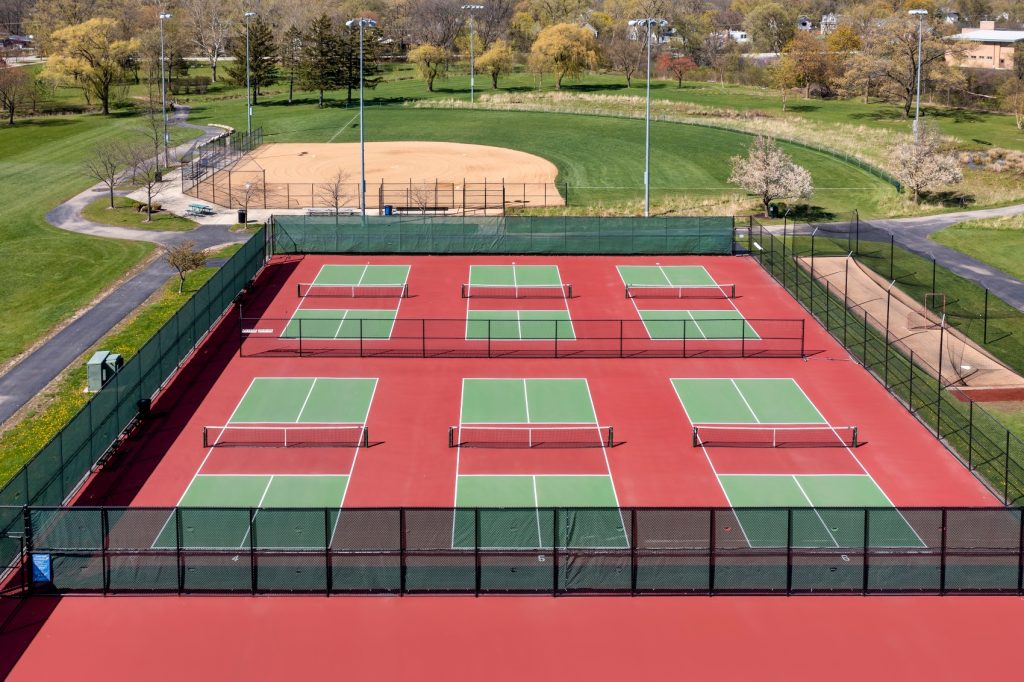
We’ve helped hundreds of clients across Southeast Asia and the Middle East save money on court resurfacing, and we can help you too. Drop us an email —we’re here to help.
Before starting acrylic court resurfacing, we always do a full inspection of the base layer to avoid future issues.
P.S. We also provide the acrylic materials for resurfacing if you have your own contractor—just let us know!