
Silicone PU Court Standard Construction Steps & Common Mistakes
This complete guide breaks down the silicone PU court standard construction steps, industry-recognized specifications, and critical mistakes to avoid for contractors in Southeast Asia and the Middle East.
Silicone PU courts have become the preferred surface material for basketball, badminton, tennis and multi-sport venues in tropical climate regions like Southeast Asia and the Middle East, thanks to its excellent shock absorption, anti-slip performance.
Mastering the silicone PU court standard construction steps is the only way to guarantee your court’s long-term durability and compliance with international sports standards.
1. Complete silicone PU court standard construction steps: 8-Step ITF & GB Compliant Process
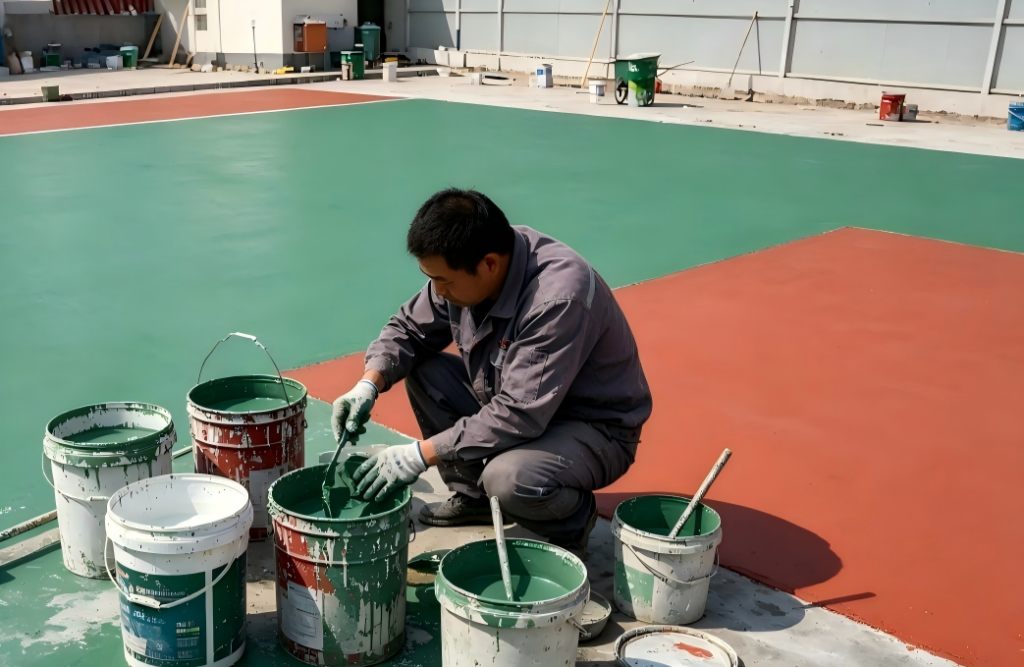
Step 1: Pre-construction Preparation & Subbase Inspection (Core Pre-work)
The quality of the subbase before construction directly determines the final service life of the silicone PU court. This step must be 100% qualified before proceeding to subsequent construction.
Every detail in this preparation phase is critical to align with the silicone PU court standard construction steps.
- Subbase Requirements: Priority is given to cement concrete subbase with C25 or higher strength. Flatness requirement: error ≤3mm with a 3-meter straightedge; drainage slope ≥3‰ horizontally and ≥2‰ longitudinally, to ensure no water accumulation within 20 minutes after rain.
- Core Inspection Items:
- Subbase moisture content ≤8% (extended curing period is required in tropical high-temperature and high-humidity areas, tested via the film covering method with no condensation after 24 hours);
- PH value of the concrete subbase ≤9, to avoid delamination of the surface layer caused by alkaline moisture return;
- No cracks, hollowing or sanding on the subbase, and expansion joints pre-filled with flexible joint filler.
- Preparation Work: Plan the construction area, prepare Baikon silicone PU matching primer, elastic layer, reinforcement layer, top coat materials. Construction ambient temperature shall be controlled between 5℃-35℃, relative humidity ≤85%. Construction is strictly prohibited in rainy or windy weather.
Step 2: Subbase Grinding & Cleaning
- Fully grind the subbase surface with a professional grinder to remove laitance, bulges and oil stains, and level cracks and depressions with special repair mortar;
- Fully clean the dust with an industrial vacuum cleaner, then rinse the subbase with clean water. Proceed to the next step after it is completely dry, to ensure the adhesion between the primer and the subbase.
Thorough subbase preparation is the first mandatory step in the silicone PU court standard construction steps.
Step 3: Waterproof Sealing Primer Application
- Function: Seal the capillary pores of the cement subbase, block the upward rise of underground moisture, and enhance the adhesion between the silicone PU elastic layer and the subbase. This is the core step to avoid later blistering and delamination.
- Construction Specifications: Stir evenly according to the product ratio, roll 2 coats evenly with a roller. Apply the second coat only after the first coat is completely dry. The coating weight is controlled at 0.15-0.2kg/㎡. The coating weight can be appropriately increased in tropical high-humidity areas to ensure complete sealing of the subbase.
- Acceptance Standard: After the primer is completely dry, the surface has no missing coating or liquid accumulation, and no sticky feeling when touched by hand.
- This sealing step is non-negotiable in the silicone PU court standard construction steps, as it prevents 90% of later blistering and delamination issues.
Never skip this sealing step, as it is a non-negotiable part of the silicone PU court standard construction steps.
Step 4: Silicone PU Elastic Layer Application (Core Structural Layer)
The elastic layer determines the shock absorption and rebound performance of the court, which is the core of ensuring sports safety, and also the step where mistakes are most likely to occur.
- Construction Specifications:
- Fully stir the Baikon silicone PU elastic layer main material and curing agent for more than 3 minutes according to the product ratio. It is strictly prohibited to add thinner at will;
- Scrape in separate layers with a scraper, single scraping thickness shall not exceed 2mm. It is strictly prohibited to apply thick coating at one time. After each layer is completely dry (≥12 hours in summer, ≥24 hours in winter), scrape the next layer until the designed thickness is reached (3-5mm for conventional basketball courts, 5-8mm for professional competition venues);
- Timely handle air bubbles and sagging during the scraping process to ensure surface flatness. Construction should be avoided during noon high temperature hours in tropical areas to prevent blistering caused by surface drying but internal wetting of the material.
- Every layer you apply must strictly follow the thickness rules set in the silicone PU court standard construction steps.
- Acceptance Standard: After the elastic layer is fully cured, the surface is flat, free of air bubbles and cracks, with thickness error ≤0.5mm.
- Following the thin-coat rule is the core of the silicone PU court standard construction steps, especially in high-humidity tropical climates.
Step 5: Reinforcement Layer Application
- Function: Compensate for minor defects on the surface of the elastic layer, improve the flatness of the surface layer, and enhance the adhesion between the top coat and the elastic layer.
- Construction Specifications: Stir the Baikon silicone PU reinforcement layer material according to the ratio, scrape 1-2 coats evenly with a scraper, with a coating weight of 0.8-1.0kg/㎡. After completely dry, lightly sand the surface with fine sandpaper, clean the dust before proceeding to the top coat application.
This smoothing step ensures your work stays aligned with the silicone PU court standard construction steps.
Step 6: Abrasion-Resistant Top Coat Application
- Function: Provide anti-slip and abrasion resistance, UV and weather resistance, as well as the color effect of the venue. It is the key layer that determines the service life and sports experience of the court.
- Construction Specifications:
- Fully stir the top coat main material, curing agent and anti-slip sand evenly according to the ratio, roll 2 coats with a roller (or spray with a special spray gun). Apply the second coat only after the first coat is completely dry, with the coating direction of the two coats perpendicular to ensure uniform color and consistent anti-slip effect;
- For tropical areas with strong UV radiation, Baikon weather-resistant top coat is preferred to improve anti-aging and anti-fading performance.
- The anti-slip top coat application must follow the guidelines in the silicone PU court standard construction steps for consistent performance.
- Acceptance Standard: After the top coat is fully cured, the surface color is uniform, no missing coating, no sagging, and the anti-slip coefficient meets the national standard requirements.
Step 7: Standard Line Marking
- Set out the line according to the international standard size of the corresponding sport (such as FIBA standard for basketball courts, ITF standard for tennis courts). After rechecking the size is correct, spray evenly with special line marking paint and line marking machine to ensure the lines are straight, clear, no virtual edges, no paint peeling.
- After the line marking is completed, repair the edge of the lines to ensure aesthetics and adhesion.
- Precision line marking is the final finishing step in the silicone PU court standard construction steps.
Step 8: Finished Product Curing & Final Acceptance
- Curing Requirements: After construction is completed, cure for 7 days at room temperature before putting into use. The curing period can be appropriately shortened in tropical high-temperature areas, but shall not be less than 5 days. During the curing period, no personnel entry and no water immersion are allowed.
- Final Acceptance: Test according to GB 36246-2018 standard. The core acceptance items include: thickness, flatness, drainage slope, anti-slip coefficient, rebound value, tensile strength. Delivery can only be made after all items are qualified.
2. Critical Mistakes That Break Your silicone PU court standard construction steps
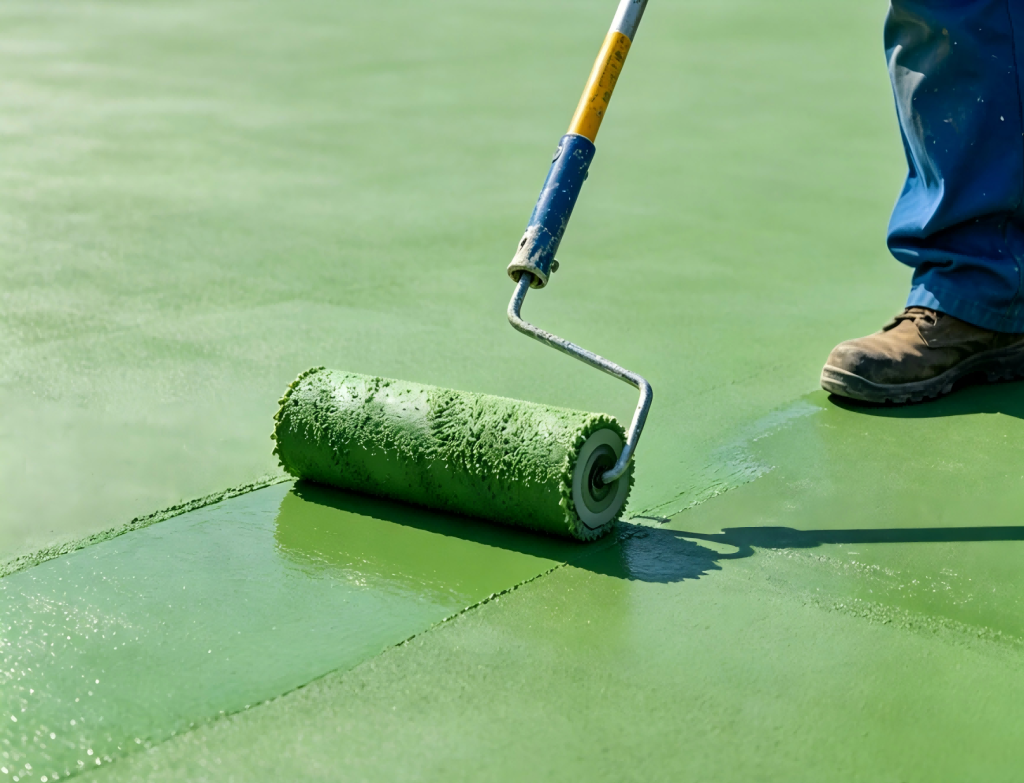
Even if you follow the silicone PU court standard construction steps perfectly, these 7 common mistakes can still lead to court failure.
Mistake 1: Ignoring subbase inspection and starting construction directly
- Hazards: Excessively high moisture content or insufficient strength of the subbase will lead to large-area blistering, delamination and cracking of the surface layer in the later stage, which is almost impossible to repair. The only solution is to completely remove and rework, resulting in a cost loss of more than 30%.
- Correct Practice: Strictly implement the subbase inspection process. Never proceed to the next step if the moisture content, PH value, strength and flatness are not up to standard. Prioritize repairing and rectifying subbase problems first.
This mistake will completely invalidate all the work you did to follow the silicone PU court standard construction steps.
Mistake 2: One-time thick coating of the elastic layer to rush the construction period
- Hazards: One-time thick coating will cause the material to dry on the surface but remain wet inside. The gas generated by the internal curing reaction cannot be discharged, forming large-area bubbles, and at the same time, shrinkage cracking and uneven thickness will occur.
- Correct Practice: Strictly implement separate thin coating, with single scraping thickness not exceeding 2mm. Proceed to the next layer only after each layer is completely cured. The drying interval of each layer can be appropriately extended in tropical high-temperature areas.
This shortcut directly violates the core safety rules of the silicone PU court standard construction steps.
Mistake 3: Forced construction in high temperature / high humidity / rainy weather
- Hazards: The material cures too fast in high temperature environment, which is prone to pinholes and bubbles; high humidity environment will lead to incomplete curing of the material, resulting in stickiness, softness and insufficient strength; construction in rainy days will directly lead to material scrapping.
- Correct Practice: Strictly control the construction environment, with temperature between 5℃-35℃ and relative humidity ≤85%. In tropical areas, priority is given to construction in the early morning and evening, avoiding noon high temperature. Check the weather forecast in advance, construction is strictly prohibited in rainy days and within 48 hours after rain.
Adverse weather construction is strictly prohibited in the silicone PU court standard construction steps.
Mistake 4: Non-standard material ratio, adding thinner at will
- Hazards: Too much or too little curing agent will lead to incomplete curing, softness, cracking and reduced wear resistance of the material; adding thinner at will will destroy the material formula system, resulting in delamination, blistering and peeling problems.
- Correct Practice: Strictly weigh and stir according to the ratio in the product manual, use the special thinner matched by the manufacturer. It is strictly prohibited to adjust the ratio without permission or add non-matching auxiliary materials.
Unauthorized material changes are not allowed in the silicone PU court standard construction steps.
Mistake 5: Ignoring the drainage slope, resulting in long-term water accumulation
- Hazards: Long-term immersion of the silicone PU surface in water will accelerate aging, delamination and blistering, greatly shortening the service life of the court.
- Correct Practice: Strictly recheck the subbase drainage slope before construction, control the flatness of each layer during construction, ensure no water accumulation within 20 minutes after rain, and repair and level the low-lying areas in advance.
Mistake 6: Insufficient curing time, putting into use in advance
- Hazards: Putting into use before the material is fully cured will cause scratches, softness and delamination of the surface layer, greatly reduce the anti-slip and wear resistance, which cannot be recovered later.
- Correct Practice: Strictly implement the curing requirements, no less than 7 days of curing at room temperature, no less than 5 days in tropical high-temperature areas. Seal the court well during the curing period, and strictly prohibit entry of personnel and vehicles.
Mistake 7: Mixing materials from different brands with insufficient compatibility
- Hazards: The material formula systems of different manufacturers are different. Mixing primer, elastic layer and top coat from different brands will cause compatibility problems, resulting in insufficient interlayer adhesion, delamination and abnormal curing, and the responsibility cannot be defined after problems occur.
- Correct Practice: Priority is given to the full set of silicone PU materials from the same brand, such as Baikon’s matching primer, elastic layer, reinforcement layer, top coat and line marking paint, to ensure material compatibility and construction stability, and enjoy full technical support and after-sales guarantee.
3. Exclusive Construction Tips for Silicone PU Courts in Tropical Climates (Southeast Asia & Middle East)
For the special climate of high temperature, high humidity and strong UV radiation in Southeast Asia and the Middle East, we have summarized 4 exclusive construction tips to greatly improve the service life of the court:
- Material Selection: Priority is given to weather-resistant silicone PU materials. Baikon’s silicone PU formula developed for tropical climates is added with imported UV-resistant additives and yellowing-resistant resin, which can resist strong UV radiation and improve anti-aging performance by more than 50%.Material selection is a critical climate-specific adjustment to the silicone PU court standard construction steps.
- Construction Time Planning: Avoid the noon high temperature period from 11:00 to 15:00 every day. Priority is given to construction from 6:00 to 10:00 in the morning and 16:00 to 20:00 in the evening to avoid surface drying but internal wetting of the material.Construction timing planning is a key adaptation of the silicone PU court standard construction steps for high-temperature regions.
- Drying Time Adjustment: In high humidity environment, the drying time of each coating layer needs to be extended by 50% to ensure complete curing before proceeding to the next construction step. It is strictly prohibited to rush the construction period.
- Finished Product Protection: After construction is completed, do a good job of sunshade protection for the court to avoid accelerated curing caused by direct strong sunlight at noon. Do a good job of rain protection during the curing period to avoid rain washing the uncured material.
4. FAQ about Silicone PU Court Construction
1. How long does the silicone PU court need to be cured after construction before use?
No less than 7 days of curing at room temperature, no less than 5 days of curing in tropical high-temperature areas, to ensure the material is fully cured and reaches the designed strength and wear resistance.This curing period is clearly defined in the silicone PU court standard construction steps.
2. Is waterproof primer mandatory for silicone PU courts on cement subbase?
Yes, waterproof primer is a mandatory core step. It can seal the capillary pores of the cement subbase, block the upward rise of underground moisture, avoid blistering and delamination of the surface layer in the later stage, and is the key to ensuring the service life of the court.Primer application is a mandatory step in the silicone PU court standard construction steps.
3. What are the optimal environmental conditions for silicone PU court construction?
The optimal construction temperature is 5℃-35℃, relative humidity ≤85%, no strong wind and no rain. Top coat spraying construction is strictly prohibited when the wind force exceeds level 3.
4. What is the recommended thickness of silicone PU surface layer for conventional basketball courts?
For conventional leisure and campus basketball courts, the recommended thickness is 3-5mm; for professional competition-level basketball courts, the recommended thickness is 5-8mm, which can be adjusted according to the use scenario and budget.
Conclusion
Primer application is a mandatory step in the silicone PU court standard construction steps.
By strictly following the silicone PU court standard construction steps, you can ensure your court meets international standards and delivers consistent performance.
The final quality of a silicone PU court is the combination of high-quality materials + standardized construction. Even the best materials cannot achieve their due performance and service life without a standard construction process.
As a professional sports surface material manufacturer, Baikon has been deeply engaged in the Southeast Asian and Middle Eastern markets for many years. We not only provide weather-resistant silicone PU court materials that meet ITF certification and national standards, but also provide full set of construction technical guidance, on-site technical support, free samples, and customized venue solutions for contractors and installers.
If you need to get silicone PU material samples, detailed construction technical manual, or consult venue construction issues, please contact us directly, and we will provide you with exclusive services within 24 hours.