
Southeast Asia Sports Flooring Industry 2026: Industry Insights, Challenges and Future Trends
As the world’s fastest-growing sports flooring market, the Southeast Asia sports flooring industry 2026 is witnessing unprecedented development opportunities. The Southeast Asian sports flooring market reached $242 million in 2025, with a compound annual growth rate (CAGR) of 8.4%, far exceeding the global average. With increased government investment in sports infrastructure, rising public awareness of fitness, and the popularity of emerging sports, demand for polyurethane running tracks, acrylic sports courts, and silicon PU surfaces continues to surge.
However, this blue ocean market is not without challenges. The extreme tropical climate, inconsistent product quality, and increasingly stringent environmental regulations are testing every player in the Southeast Asia sports flooring industry 2026. This article provides an industry perspective on the current state, pain points, and future trends of the market, offering valuable insights for industry practitioners.
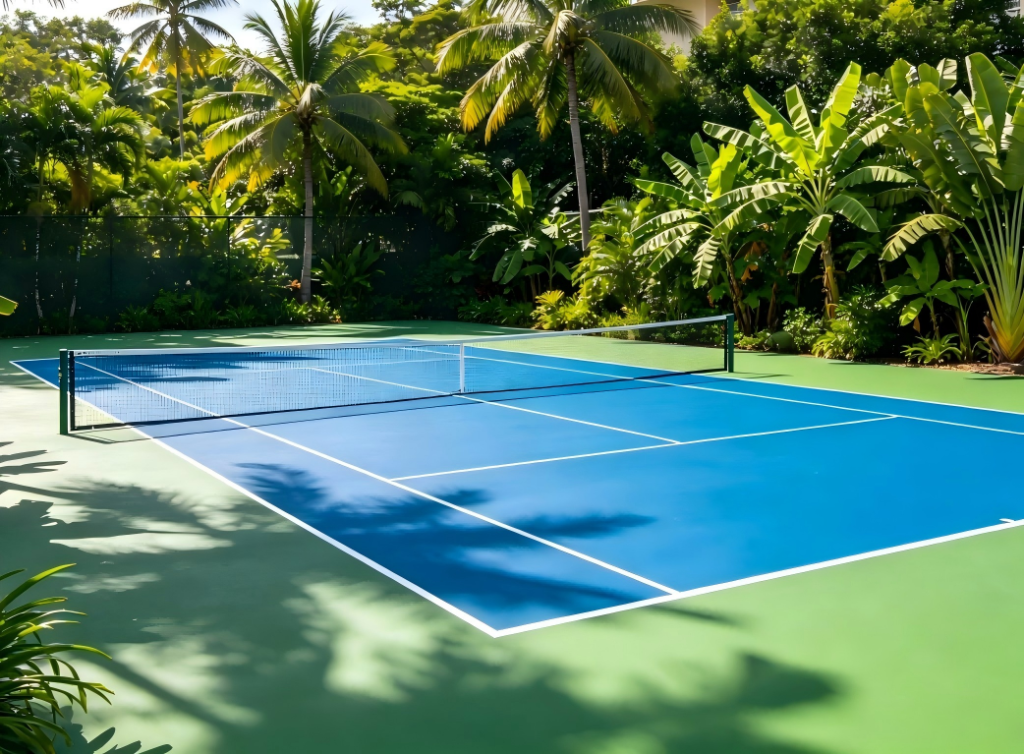
Market Overview of the Southeast Asia Sports Flooring Industry 2026
The rapid expansion of the Southeast Asia sports flooring industry 2026 is driven by three core forces:
First, large-scale construction in the education sector. Governments across Southeast Asia have universally integrated physical education into their national education systems, making the construction and renovation of school sports facilities a top priority. Countries such as Malaysia, Thailand, and Indonesia have successively launched “Campus Sports Upgrade Programs,” with over 5,000 schools building or renovating sports facilities in 2025 alone.
Second, the rapid expansion of community sports spaces. As urbanization accelerates, demand for recreational sports among urban residents is growing exponentially. Governments are building multi-purpose sports courts in parks and community centers to meet residents’ fitness needs. At the same time, the number of commercial gyms and sports clubs is increasing rapidly, driving demand for professional sports flooring.
Third, the rise of emerging sports. Pickleball, padel tennis, and frisbee have gained massive popularity across Southeast Asia, creating significant new demand for specialized courts. Padel tennis, in particular, has experienced explosive growth in Thailand, Singapore, and Malaysia, with over 300 new courts added in 2025.
In terms of product structure, acrylic sports courts and polyurethane running tracks remain the mainstream products in the Southeast Asia sports flooring industry 2026, accounting for approximately 40% and 30% of the market share respectively. Silicon PU surfaces are rapidly gaining market share due to their excellent elasticity and durability, and are expected to reach 25% by 2030.
Core Pain Points in the Southeast Asia Sports Flooring Industry 2026
Despite the promising market outlook, the Southeast Asia sports flooring industry 2026 faces three core pain points that severely restrict its healthy development:
First, climate adaptability remains the biggest challenge. Southeast Asia’s year-round high temperatures, high humidity, and intense UV radiation place extremely high demands on sports surface performance. Generic materials formulated for temperate climates often have extremely short service lives in Southeast Asia, with many newly built tracks experiencing bubbling, cracking, and fading within 1-2 years. Our surveys in Jakarta and Bangkok found that over 60% of sports facilities require major renovations after just 3 years of use.
Second, inconsistent product quality and intensifying price wars. The market is flooded with low-quality, cheap products. Many small manufacturers use recycled materials, inferior fillers, and unqualified additives to cut costs, resulting in products that fail to meet environmental standards and have unstable performance. This vicious price competition not only harms consumers’ interests but also damages the reputation of the entire Southeast Asia sports flooring industry 2026.
Third, increasing environmental compliance pressure. As environmental awareness grows, governments across Southeast Asia have introduced stricter environmental standards, setting clear requirements for VOC emissions and heavy metal content in sports flooring materials. Developed countries such as Singapore and Malaysia have already implemented international-level environmental standards, banning many non-compliant products from entering the market.
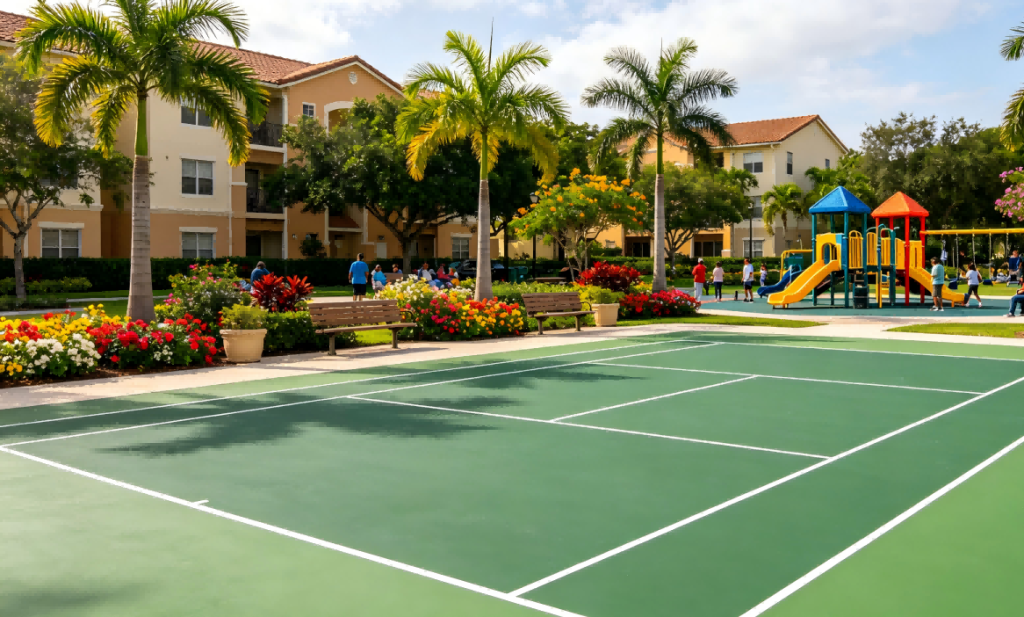
Future Trends Shaping the Southeast Asia Sports Flooring Industry 2026
Faced with market changes and challenges, the Southeast Asia sports flooring industry 2026 is upgrading in four key directions:
1. Climate-Customized Materials Dominate the Southeast Asia Sports Flooring Industry
Developing specialized formulation systems tailored to Southeast Asia’s unique climate has become an industry consensus. In the future, climate-customized materials that are heat-resistant, UV-stabilized, moisture-proof, and mildew-resistant will dominate the market. For example, our tropical-formulated polyurethane systems with advanced UV inhibitors have been proven to last 8-10 years in Southeast Asia, twice the lifespan of generic products.
2. Environmental Sustainability Becomes Non-Negotiable
Environmental protection will no longer be a selling point but a basic requirement for market entry. Low-VOC, zero-heavy-metal, and recyclable materials will become the industry standard. Manufacturers that fail to meet environmental requirements will be gradually eliminated from the market.
3. Professionalization and Specialization
As the market matures, demand for specialized sports surfaces is increasing. Different sports require different performance characteristics, and one-size-fits-all solutions will no longer meet market needs. Professional surfaces for padel tennis, pickleball, and futsal will see the fastest growth in the coming years.
4. Digitalization of Construction and Maintenance
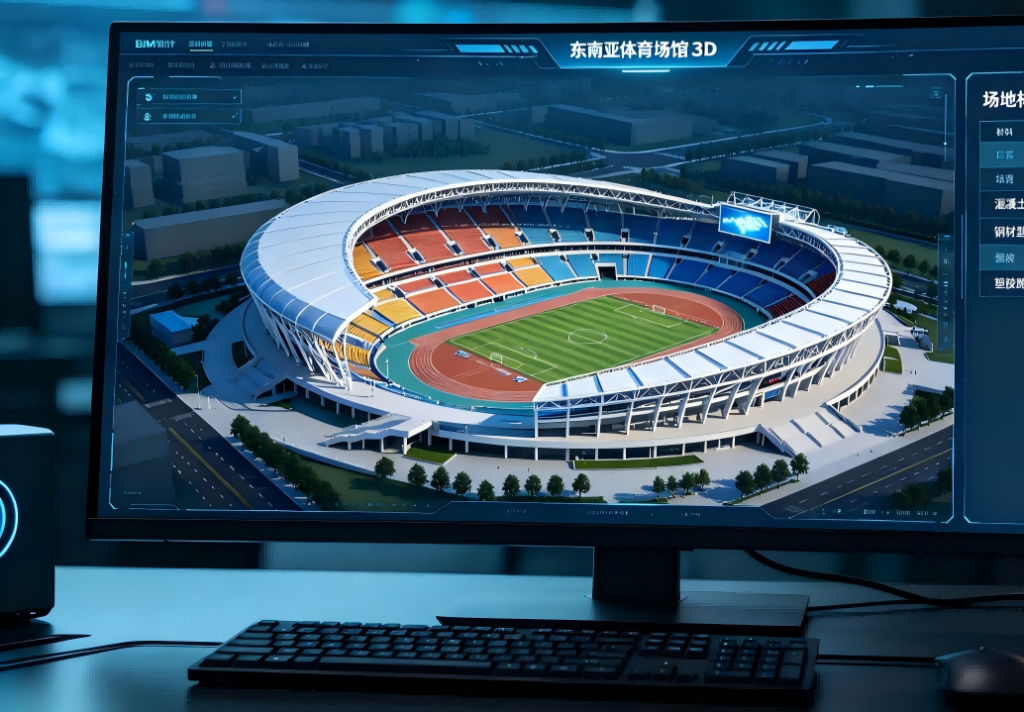
Digital technologies such as BIM (Building Information Modeling) and IoT (Internet of Things) are being increasingly applied to sports facility construction and maintenance. Digital construction ensures precise installation, while IoT sensors can monitor surface performance in real time, enabling predictive maintenance and extending service life.
Final Thoughts
The Southeast Asia sports flooring industry 2026 is entering a critical period of transformation and upgrading. While the market offers enormous opportunities, only manufacturers that can provide climate-adapted, environmentally friendly, and high-quality products will succeed in the long run.
As a leading sports flooring manufacturer with 5 years of local experience in Southeast Asia, we understand the unique challenges of building sports facilities in tropical climates. Our climate-customized systems meet all major national standards in the region and have been successfully applied in hundreds of projects across Malaysia, Thailand, Indonesia, and Vietnam.
If you are looking for a reliable partner for your sports facility project, our team of experts can provide you with customized solutions tailored to your specific needs and local climate conditions.