
Polyurethane Running Track Construction in Southeast Asia: 2026 Climate-Ready Guide
If you’re planning polyurethane running track construction in Southeast Asia, you’ve probably heard the horror stories: brand new tracks bubbling after one monsoon, cracking after two years, or fading so badly they’re unrecognizable. The problem isn’t polyurethane itself—it’s that 90% of contractors use generic systems designed for temperate climates, not our region’s 35°C+ year-round heat, 80%+ humidity, and intense UV radiation. After 5 years completing over 120 polyurethane running track construction in Southeast Asia projects across Malaysia, Thailand, Indonesia and Vietnam, we’ve developed a climate-specific process that ensures tracks last 8–10 years, not 18 months.
This guide skips the generic marketing fluff and shares exactly what works for tropical weather. We’ll break down the non-negotiable construction steps, the mistakes that destroy tracks early, and how to choose materials that won’t fail in our harsh climate.
Why Generic Polyurethane Tracks Fail in Southeast Asia
Standard international track systems are tested for mild temperatures and low humidity. They cannot survive the three unique challenges of polyurethane running track construction in Southeast Asia:
First, extreme UV radiation breaks down the polyurethane binder. Within 24 months, the surface becomes brittle, loses elasticity, and cracks. We recently inspected a school track in Jakarta that used a European generic system; after just 22 months, the entire top layer had crumbled and needed full replacement.
Second, high temperatures cause thermal deformation. Outdoor track surfaces can reach 65°C at midday, which softens standard polyurethane and leads to uneven wear, poor traction, and increased injury risk. This is a common failure point in unprofessional polyurethane running track construction in Southeast Asia.
Third, trapped moisture causes catastrophic bubbling. This is the #1 cause of premature track failure in our region. If moisture gets trapped between the concrete base and polyurethane layer, it turns to steam when heated by the sun, pushing the surface upward into large bubbles that eventually burst.
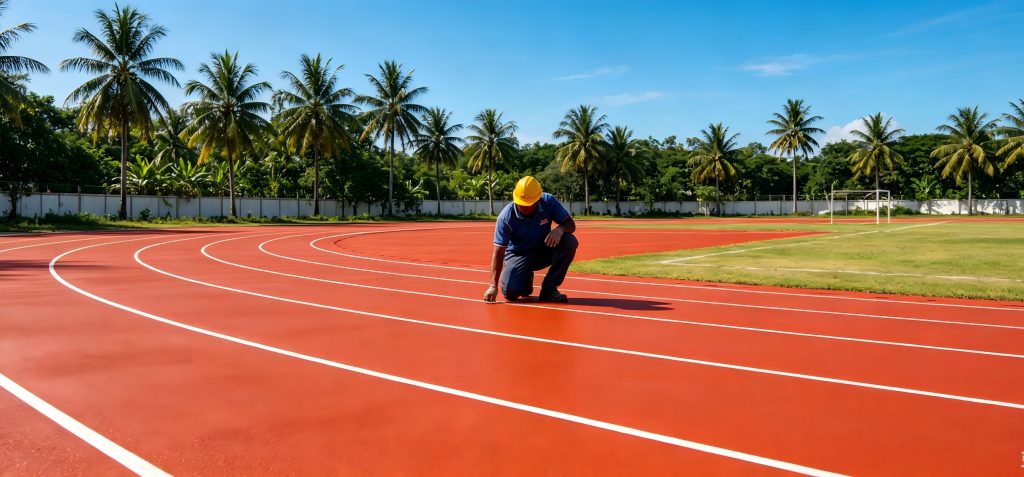
Step-by-Step Climate-Ready Polyurethane Running Track Construction
This is the exact process we use for all our polyurethane running track construction in Southeast Asia projects, refined over 5 years to eliminate climate-related failures:
1. Base Preparation and Mandatory Moisture Testing
The foundation determines 70% of your track’s lifespan. For polyurethane running track construction in Southeast Asia, we never skip these steps:
- Test concrete moisture content with a professional meter—must be below 4% before any material is applied
- Grind the surface to create a rough texture for maximum adhesion
- Repair all cracks and uneven areas with a flexible concrete patching compound
- Allow new concrete to cure for a minimum of 28 days (rushing this guarantees bubbling)
2. Tropical-Grade Moisture Barrier Application
This is the step that 90% of unqualified contractors skip to cut costs. We apply a two-part epoxy moisture barrier that penetrates the concrete and locks in residual moisture, preventing water vapor from rising and damaging the polyurethane layer.
We used this system on a university polyurethane running track construction in Southeast Asia project in Penang, where the concrete base had a moisture content of 5.1%. Even after three monsoon seasons, the track shows zero signs of bubbling or delamination.
3. Three-Layer Polyurethane System Installation
We use a tropical-formulated three-layer system exclusively for polyurethane running track construction in Southeast Asia:
- Base layer: High-density elastic layer that provides shock absorption and bridges small cracks
- Middle layer: Reinforced structural layer that prevents thermal deformation
- Top layer: UV-stabilized wear layer with EPDM granules for excellent traction and 8+ year color retention
Each layer is allowed to cure completely before the next is applied. We never schedule polyurethane running track construction in Southeast Asia during the rainy season, as even high humidity can trap moisture between layers.
4. Standard Line Marking and Inspection
We use weather-resistant polyurethane paint for line markings, which bonds directly to the track surface and won’t peel or fade. After installation, we conduct a full inspection to ensure the track meets all standard performance requirements for shock absorption, traction and flatness.
3 Common Mistakes That Ruin Tracks in Southeast Asia
Almost all premature failures in polyurethane running track construction in Southeast Asia are caused by avoidable mistakes:
- Using indoor polyurethane outdoors: Indoor formulations have no UV protection and will degrade in 1–2 years. Always insist on outdoor-specific polyurethane designed for high UV environments.
- Skipping the moisture barrier: This saves contractors 10% of the cost but guarantees your track will bubble within 3 years.
- Rushing the curing process: Many contractors cut curing time to finish early, but trapped moisture will cause permanent damage.
Choosing the Right Certification for Your Project
It’s important to understand the difference between certification levels for polyurethane running track construction in Southeast Asia:
- WA (World Athletics) Certification: Only required for international professional competitions and top-tier national sports facilities. It adds 30–50% to the project cost and is completely unnecessary for most schools, universities and community facilities.
- Local National Standards: For 95% of projects, compliance with your country’s national safety and performance standards is more than sufficient. These standards prioritize environmental safety, durability and player protection at a reasonable cost.
Our polyurethane systems are formulated exclusively for tropical climates and meet all major Southeast Asian national standards. A secondary school in Bangkok chose our system after their previous generic track failed in 2 years; five years later, their track still looks and performs like new.
Final Thoughts
Successful polyurethane running track construction in Southeast Asia requires more than just following generic instructions. It requires materials and processes specifically designed to handle our region’s extreme weather. By working with an experienced local contractor who understands tropical construction challenges, you can build a track that will last 8–10 years with minimal maintenance.
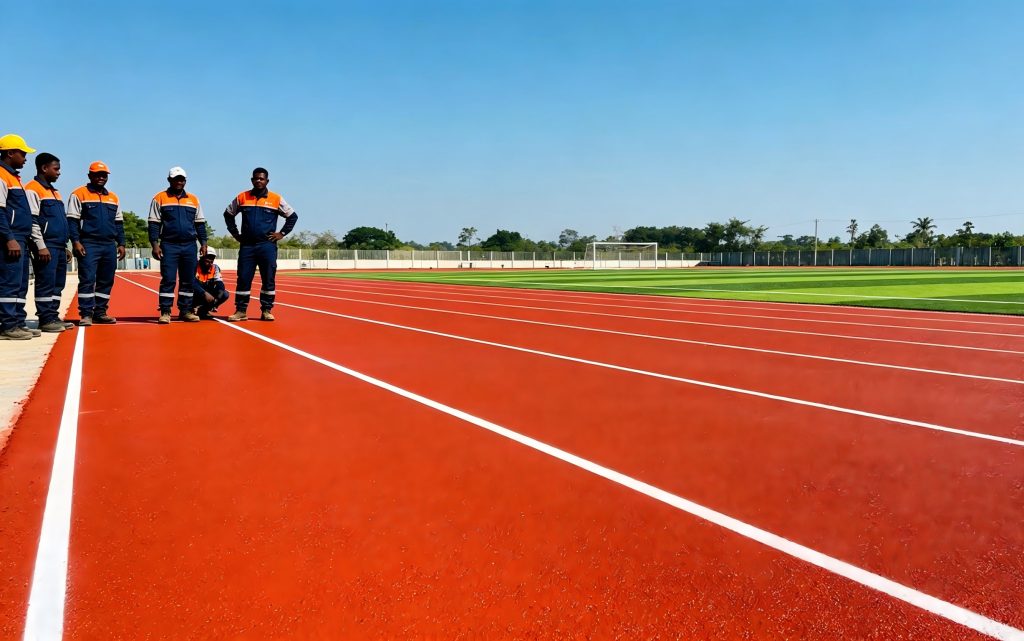
If you’re planning a polyurethane running track construction in Southeast Asia project, don’t let cheap materials and unqualified contractors ruin your investment. Our team has 5 years of local experience and hundreds of successful projects across the region. We can help you design and build a track that meets your needs and stands up to our tropical climate.